
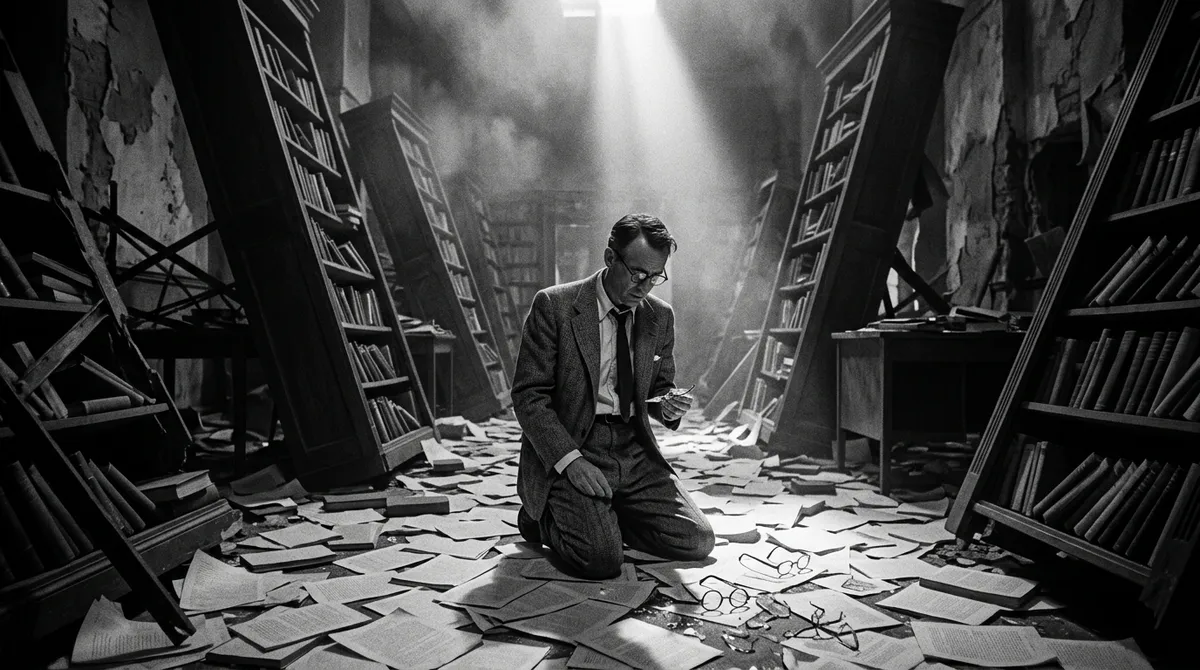
A Classic That Still Sparks Debate
Decades after its original broadcast, "Time Enough at Last" continues to stand as one of The Twilight Zone's most famous episodes—and arguably its most divisive. The bleak tale has become a touchstone for discussions about the show's approach to irony and punishment, with fans still split on whether its tragic conclusion represents brilliant storytelling or unnecessary cruelty.
The Episode's Enduring Cultural Impact
According to reports, "Time Enough at Last" has achieved something rare in television: its ending has become pop-culture shorthand, instantly recognizable even to those who haven't seen the full episode. This cultural penetration speaks to the power of the story's central tragedy, but also contributes to the ongoing debate about its merits.
The episode's influence extends far beyond its original run, continuing to resonate with modern audiences who encounter it through reruns, streaming platforms, and cultural references scattered throughout contemporary media.
The Great Fan Divide: Irony vs. Cruelty
At the heart of the ongoing controversy lies a fundamental question that fans continue to grapple with: was protagonist Henry Bemis punished too harshly? This central debate has created distinct camps among Twilight Zone enthusiasts, with passionate arguments on both sides.
Some viewers see the episode as a masterclass in poetic irony—a perfect example of the show's ability to deliver cosmic justice with surgical precision. Others argue that the ending crosses the line from clever storytelling into needless cruelty, questioning whether the punishment fits the character's relatively minor transgressions.
This division reflects a broader discussion about the difference between irony and cruelty in horror television, with "Time Enough at Last" serving as a prime case study for these competing philosophies.
Why It Hits Different in the Modern Era
According to reports, the episode's themes of loneliness and escapism feel sharply relevant in today's always-on media age. The story's exploration of isolation and the desire to disconnect from society resonates differently with contemporary audiences who live in an era of constant connectivity and digital overwhelm.
The episode's examination of escapism through reading takes on new dimensions when viewed through the lens of modern fan culture, where discussions about media consumption, social isolation, and the need for personal space have become increasingly prevalent.
A Springboard for Broader Discussions
The continuing relevance of "Time Enough at Last" has made it a valuable entry point for larger conversations about The Twilight Zone's legacy. According to reports, creators and fans use the episode as a springboard for debate-style content, examining whether its ending represents the series at its best or worst.
These discussions often expand into broader rankings of Twilight Zone endings, with "Time Enough at Last" serving as a benchmark against which other episodes are measured. The question of which endings have aged best—or worst—frequently centers around the same themes that make this particular episode so divisive.
The Reappraisal Factor
Classic television is constantly being reappraised through the lens of modern fan culture, and "Time Enough at Last" exemplifies this phenomenon. According to reports, contemporary discussions about the episode often focus on questions of morality and whether characters receive their "deserved" punishment—concepts that reflect changing attitudes toward justice and empathy in storytelling.
This ongoing reexamination ensures that the episode remains a living piece of television history, with each generation of viewers bringing their own perspectives to bear on its controversial conclusion.
The Lasting Question
Perhaps the true genius of "Time Enough at Last" lies not in its ending, but in its ability to generate discussion more than half a century after its creation. Whether viewers see it as a brilliant example of ironic storytelling or an exercise in unnecessary cruelty, the episode continues to provoke the kind of passionate debate that defines truly memorable television.
As long as fans continue to discover and rediscover The Twilight Zone, "Time Enough at Last" will likely remain at the center of discussions about the series' approach to cosmic justice, human nature, and the sometimes thin line between clever irony and simple meanness.