
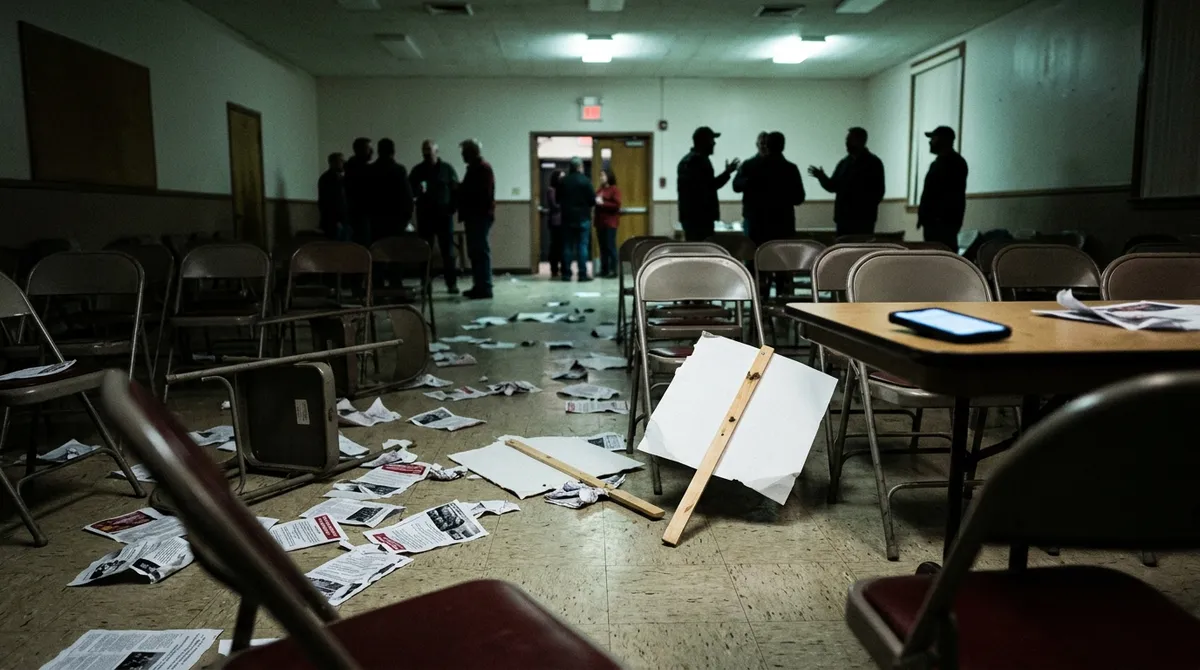
Internal Warfare Erupts Among Far-Right Factions
The far-right political movement is experiencing a dramatic public implosion following the Makerfield by-election, according to reports from Novara Media. What began as electoral disappointment has spiraled into open warfare between competing factions, with conspiracy theories, blame games, and personal attacks dominating the discourse.
The meltdown reveals significant fractures in the movement's ability to maintain unity and electoral relevance during what observers describe as a critical political moment. Rather than presenting a cohesive response to their setbacks, far-right groups have turned their anger inward, creating a spectacle of recriminations and ideological infighting.
Conspiracy Theories Replace Strategic Planning
According to reports, conspiracy theories have become the primary vehicle for explaining away the movement's failures in Makerfield. Rather than conducting honest assessments of their electoral strategy or messaging, competing factions have resorted to elaborate theories about betrayal and sabotage within their own ranks.
This reliance on conspiracy thinking appears to be undermining any possibility of unified far-right strategy going forward. When movements cannot agree on basic facts about their own performance, developing coherent political strategies becomes virtually impossible.
Social Media Amplifies the Chaos
Reports indicate that social media platforms are playing a significant role in amplifying and accelerating the extremist infighting. What might have once remained private disputes between faction leaders are now playing out in public forums, creating a feedback loop of escalating hostility and paranoia.
The public nature of these disputes is particularly damaging to the far-right's attempts to present itself as a serious political force. When potential supporters witness leadership figures trading insults and conspiracy theories rather than policy proposals, the movement's credibility suffers substantially.
Electoral Reality Meets Extremist Rhetoric
The Makerfield by-election appears to have exposed a significant gap between far-right rhetoric and electoral reality. According to reports, the movement's inability to translate online presence and activist energy into actual votes has created a crisis of confidence among supporters and leaders alike.
This disconnect between digital influence and real-world political power has forced uncomfortable questions about the movement's actual size and appeal. The resulting cognitive dissonance appears to be driving much of the current conspiracy theorizing and blame-shifting.
Opportunism Emerges from the Wreckage
Reports suggest that some figures within the far-right ecosystem are positioning themselves to benefit from the current chaos. Rather than working to heal divisions, certain actors appear to be exploiting the confusion to advance their own factional interests or personal brands.
This opportunistic behavior is further fragmenting an already divided movement, creating multiple competing power centers rather than the unified front that far-right ideology theoretically demands.
Broader Implications for Extremist Organizing
The public nature of this meltdown provides insights into how extremist movements respond to setbacks and maintain cohesion under pressure. According to reports, the current crisis reveals fundamental weaknesses in the far-right's organizational capacity and leadership structures.
Political observers note that movements built primarily on anger and grievance often struggle to develop the institutional stability necessary for sustained political success. The Makerfield aftermath appears to confirm this analysis, as ideological purity tests and personal loyalty disputes take precedence over strategic thinking.
Looking Forward
As the far-right continues to grapple with internal conflicts and conspiracy theories, questions remain about the movement's ability to recover and reorganize. The public nature of current disputes may have lasting effects on recruitment and credibility, particularly among potential supporters who expected more professional political organization.
The situation continues to develop as various factions work to control the narrative around Makerfield and position themselves for whatever comes next in far-right politics.